Dressmaker

Definition and stakes

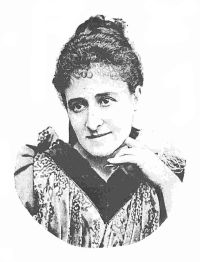
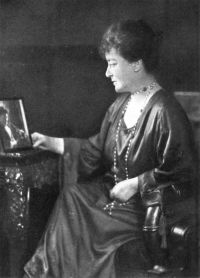
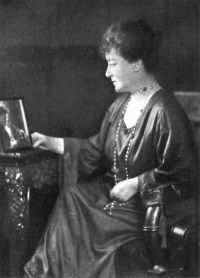
Winifred Margaretta Kirkland,  ../../ (1904)

“ Man does not encounter the demoralizing influence of the dressmaker, that creature with mouth of pins and suave words. To what degrading subterfuge are we not reduced to get our own way with the dressmaker, seeing with what delight and dexterity she lifts her spurning foot against our desires! Do we presume to know what we want to wear?—alternately she sporteth and scorneth—and yet we lift not against her her proper scissors. She practices dark arts; she runs an hypnotic finger along the seam, and the wrinkle is no more seen—until the dress comes home. ”
Source: Wikisource

Mary P. Merrifield,  Dress as a Fine Art, with Suggestions on Children's Dress

“ Now, only suppose that the dressmaker had the painter's knowledge of form and harmony of lines and colors, what a revolution would take place in dress? We should no longer see the tall and the short, the slender and the stout, the brown and the fair, the old and the young, dressed alike, but the dress would be adapted to the individual; and we believe that, were the plan of study we recommend generally adopted, this purpose might always be effected without the sacrifice of what is now the grand desideratum in dress—novelty. ”
Source: Gutenberg

Lady Marjory MacMurchy Willison,  The Canadian Girl at Work: A Book of Vocational Guidance

“ If she is really a competent dressmaker, her employment is assured. But it is a mistake for a girl or young woman without training or experience, or without a dressmaker's gifts, to undertake dressmaking by the day. A dressmaker—to define the term—is one who understands cutting, fitting, and making dresses sufficiently well to undertake the occupation as a trade. A girl should be at least eighteen or twenty before she becomes a day seamstress. In this work she is on her own responsibility and is handling goods of some value, so that she needs judgment as well as knowledge. ”
Source: Gutenberg

Get perspective with Kwize: daily news enlightened by great literature