Sokoto

Definition and stakes

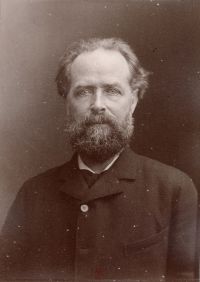
Portrait of William Le Queux William Le Queux,  The Eye of Istar: A Romance of the Land of No Return

“ Beside the small river—scarcely more than a brook—we journeyed over ground thickly covered with herbage and flowers. For a few minutes we allowed our camels to browse, then urged them on, remembering it was imperative that we should arrive at Sokoto before the gate closed for the night. The shadow cast by the rocks, the cool rippling of the water, and the fertility of the country we appreciated after the arid, sun-baked wilderness. ”
Source: Gutenberg

Portrait of William Le Queux William Le Queux,  The Eye of Istar: A Romance of the Land of No Return

“ Proud, ignorant, bigoted and insolent, the people of Sokoto are all owners of cattle, camels, horses and slaves. These latter, along with the women, generally cultivate some fields of dhurra, or corn, sufficient for their wants. The Arab, in Sokoto, would consider it a disgrace to practice any manual labour. He is essentially a hunter, a robber and a warrior, and, after caring for his cattle, devotes all his energies to slave-hunting and war. The lower classes are simply a rabble of filth, petty mendicancy, gaol-bird physiognomy and cringing hypocrisy. ”
Source: Gutenberg

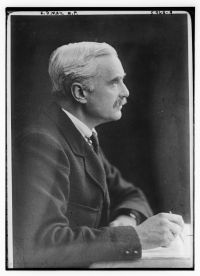
Flora, Lady Lugard,  1911 Encyclopædia Britannica (1911)

“ These states and Sokoto itself, known variously as the Sokoto or Fula empire and Hausaland, came (c. 1900–1903) under direct British control, but the native governments are maintained. The province of Sokoto occupies the north-west corner of the British protectorate, and is bounded west and north by French territory. South and east it adjoins other parts of the British protectorate. Bordering north on the Sahara, it contains much arid land, but south-west the land is very fertile. ”
Source: Wikisource

Get perspective with Kwize: daily news enlightened by great literature