Sokeman

Definition and stakes

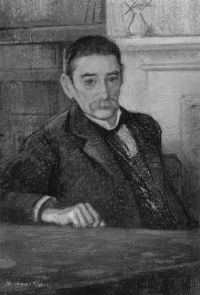
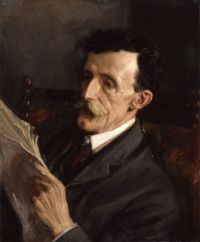
Portrait of Frederic William Maitland Frederic William Maitland,  Domesday Book and Beyond: Three Essays in the Early History of England

“ Often enough the ‘free man’ can not sell without the consent of his lord [417] . We have just met with a ‘free man’ who had to obtain the consent both of the lord of his commendation and of the lord of his soke [418] . On the other hand, the sokeman who can sell without his lord’s leave is no rare being [419] , and it was of a sokeman that we read how he could sell, not only his land, but also his soke [420] .
Difference between ‘free men’ and sokemen.
Again, we dare not say that while the ‘free man’ is the justiciable of a national court, the soke over the sokeman belongs to his lord.
”
Source: Gutenberg

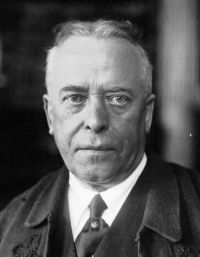
Portrait of Frederic William Maitland Frederic William Maitland,  Domesday Book and Beyond: Three Essays in the Early History of England

“ In the first place, we can not doubt that the ‘open field system’ of agriculture prevails as well in the free villages as in those that are under the control of a lord. The sokeman’s hide or virgate is no ring-fenced ‘close’ but is composed of many scattered strips. Again, we can hardly doubt that the practice of ‘co-aration’ prevailed. The sokeman had seldom beasts enough to make up a team. It is well known that the whole scheme of land-measurements which runs through Domesday Book is based upon the theory that land is ploughed by teams of eight oxen. ”
Source: Gutenberg

Portrait of Frederic William Maitland Frederic William Maitland,  Domesday Book and Beyond: Three Essays in the Early History of England

“ This prevents our saying that a sokeman is one over whom his lord has soke, or one who renders soke to his lord. We may doubt whether the line between the sokemen and the ‘free men’ is drawn in accordance with any one principle. Not only is freedom a matter of degree, but freedom is measured along several different scales. At one time it is to the power of alienation or ‘withdrawal’ that attention is attracted, at another to the number or the kind of the services and ‘customs’ that the man must render to his lord. ”
Source: Gutenberg

Get perspective with Kwize: daily news enlightened by great literature