Summary

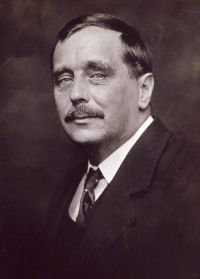
Portrait of H. G. Wells H. G. Wells Russia in the Shadows

In Russia I must confess my passive objection to Marx has changed to a very active hostility. Wherever we went we encountered busts, portraits, and statues of Marx. About two-thirds of the face of Marx is beard, a vast solemn woolly uneventful beard that must have made all normal exercise impossible. It is not the sort of beard that happens to a man, it is a beard cultivated, cherished, and thrust patriarchally upon the world. It is exactly like Das Kapital in its inane abundance, and the human part of the face looks over it owlishly as if it looked to see how the growth impressed mankind.
Source: Gutenberg

Portrait of H. G. Wells H. G. Wells Russia in the Shadows

It was not communism which built up these great, impossible cities, but capitalism. It was not communism that plunged this huge, creaking, bankrupt empire into six years of exhausting war. It was European imperialism. Nor is it communism that has pestered this suffering and perhaps dying Russia with a series of subsidised raids, invasions, and insurrections, and inflicted upon it an atrocious blockade. The vindictive French creditor, the journalistic British oaf, are far more responsible for these deathbed miseries than any communist.
Source: Gutenberg

Portrait of H. G. Wells H. G. Wells Russia in the Shadows

Left Communism is the backbone of Russia to-day; unhappily it is a backbone without flexible joints, a backbone that can be bent only with the utmost difficulty and which must be bent by means of flattery and deference.
Moscow under the bright October sunshine, amidst the fluttering yellow leaves, impressed us as being altogether more lax and animated than Petersburg. There is much more movement of people, more trading, and a comparative plenty of droshkys. Markets are open. There is not the same general ruination of streets and houses.
Source: Gutenberg

Get perspective with Kwize: daily news enlightened by great literature