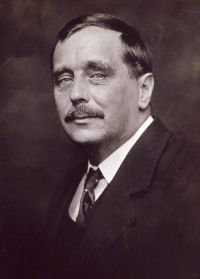
H. G. Wells

H. G. Wells

Summary

Portrait of H. G. Wells H. G. Wells The Country of the Blind (1911)

It was Medina-sarote who persuaded Nunez to face the blind surgeons.
“YOU do not want me,” he said, “to lose my gift of sight?”
She shook her head.
“My world is sight.”
Her head drooped lower.
“There are the beautiful things, the beautiful little things—the flowers, the lichens amidst the rocks, the light and softness on a piece of fur, the far sky with its drifting dawn of clouds, the sunsets and the stars. And there is YOU. For you alone it is good to have sight, to see your sweet, serene face, your kindly lips, your dear, beautiful hands folded together. . . . .
Source: Wikisource

Portrait of H. G. Wells H. G. Wells The Country of the Blind (1911)

But life was very easy in that snow-rimmed basin, lost to all the world, with neither thorns nor briers, with no evil insects nor any beasts save the gentle breed of llamas they had lugged and thrust and followed up the beds of the shrunken rivers in the gorges up which they had come. The seeing had become purblind so gradually that they scarcely noticed their loss. They guided the sightless youngsters hither and thither until they knew the whole valley marvellously, and when at last sight died out among them the race lived on.
Source: Wikisource

Portrait of H. G. Wells H. G. Wells The Country of the Blind (1911)

Blind men of genius had arisen among them and questioned the shreds of belief and tradition they had brought with them from their seeing days, and had dismissed all these things as idle fancies and replaced them with new and saner explanations. Much of their imagination had shrivelled with their eyes, and they had made for themselves new imaginations with their ever more sensitive ears and finger-tips. Slowly Nunez realised this: that his expectation of wonder and reverence at his origin and his gifts was not to be borne out
Source: Wikisource

Get perspective with Kwize: daily news enlightened by great literature