Summary

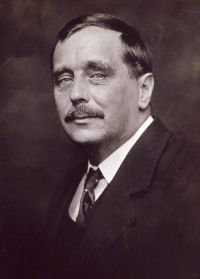
Portrait of H. G. Wells H. G. Wells The Soul of a Bishop

And here was the familiar palace at Princhester, and in an armchair in his bed-room sat Bishop Scrope insensible and motionless, in a trance in which he was dreaming of the coming of God.
“I see my futility. I see my vanity. But what am I to do?” he said, turning to the darkness that now wrapped about the Angel again, fold upon fold. “The implications of yesterday bind me for the morrow. This is my world. This is what I am and what I am in. How can I save myself? How can I turn from these habits and customs and obligations to the service of the one true God?
Source: Gutenberg

Portrait of H. G. Wells H. G. Wells The Soul of a Bishop

The Angel was but a voice now; the bishop and the Angel were somewhere aloof from and yet accessible to the circling silver sphere.
At the time all that happened seemed to happen quite naturally, as things happen in a dream. It was only later, when all this was a matter of memory, that the bishop realized how strange and incomprehensible his vision had been. The sphere was the earth with all its continents and seas, its ships and cities, its country-sides and mountain ranges. It was so small that he could see it all at once, and so great and full that he could see everything in it.
Source: Gutenberg

Portrait of H. G. Wells H. G. Wells The Soul of a Bishop

The Bishop of Princhester had not meant to go so far. But he stuck to his words. “As if I saw with my eyes. A God of light and courage.”
“You have had visions, Scrope?”
“I seemed to see.”
“No, you have just been dreaming dreams.”
“But why should one not see?”
“See! The things of the spirit. These symbols as realities! These metaphors as men walking!”
“You talk like an agnostic.”
“We are all agnostics. Our creeds are expressions of ourselves and our attitude and relationship to the unknown. The triune God is just the form of our need and disposition.
Source: Gutenberg

Get perspective with Kwize: daily news enlightened by great literature