Summary

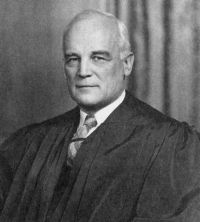
Portrait of Harold Hitz Burton Harold Hitz Burton Spiegel's Estate v. Commissioner of Internal Revenue…

That is so for many purposes but where, as here, a tax, by hypothesis, can attach only if some possibility of a reverter can arise in favor of the settlor before his death, then it is inescapably necessary to determine whether or not, by operation of the law of Illinois, such a possibility of reverter can arise under this trust. To say in such a situation that the language of the conveyance makes no difference is to beg the question.
Source: Wikisource

Portrait of Harold Hitz Burton Harold Hitz Burton Spiegel's Estate v. Commissioner of Internal Revenue…

The reasoning of the Reinecke case requires that, for a transfer to be taxable in a case like this, the settlor must have intended that the transfer come from the sett or and that it take effect in possession or enjoyment at or after the settlor's death. It must be from the dead to the living. That requirement calls for the existence of an interest, right or control in the settlor, or at least the existence of some possibility of a reverters to the settlor or to his estate, amounting to a string or tie to the trust property, in order to make § 811 (c) applicable.
Source: Wikisource

Portrait of Harold Hitz Burton Harold Hitz Burton Spiegel's Estate v. Commissioner of Internal Revenue…

One may freely give his property to another by absolute gift without subjecting himself or his estate to a tax, but we are asked to say that this statute means that he may not make a gift inter vivos, equally absolute and complete, without subjecting it to a tax if the gift takes the form of a life estate in one with remainder over to another at or after the donor's death.
Source: Wikisource

Get perspective with Kwize: daily news enlightened by great literature