Summary

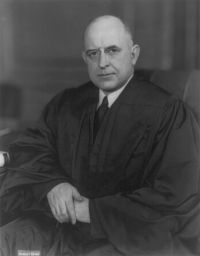
Portrait of Stanley Forman Reed Stanley Forman Reed Helvering v. Stuart — Opinion of the Court

Disregarding for the moment the minority of some of the beneficiaries, we think not. So broad a basis would tax to a father the income of a simple trust with a disinterested trustee for the benefit of his adult child. No act of Congress manifests such an intention. Economic gain realized or realizable by the taxpayer is necessary to produce a taxable income under our statutory scheme. That gain need not be collected by the taxpayer.
Source: Wikisource

Portrait of Stanley Forman Reed Stanley Forman Reed Helvering v. Stuart — Opinion of the Court

As indicated in the cases of the Board of Tax Appeals cited in the immediately preceding note, the Board has restricted the tax liability of a grantor of a trust for the support and maintenance of an infant and other purposes to such sums as, actually or by presumption, have been expended to relieve the settlor of his obligations. The Board has not taxed the whole of such income to the taxpayer merely because a part could have been but was not used for the support of an infant. We take a contrary view.
Source: Wikisource

Portrait of Stanley Forman Reed Stanley Forman Reed Helvering v. Stuart — Opinion of the Court

But evidently the Court of Appeals does not consider that these trustees under Illinois law have the power to vest this property in themselves. Such a result follows from their view that the property could not be vested in the grantors. Consequently, this power of the trustees is not a general power but a power in trust exercisable as fiduciaries to carry out the purposes of the trust. We therefore do not need to decide whether if they could vest the property in themselves they would have an interest adverse to the grantor. Without that power their interest certainly is not adverse.
Source: Wikisource

Get perspective with Kwize: daily news enlightened by great literature