Summary

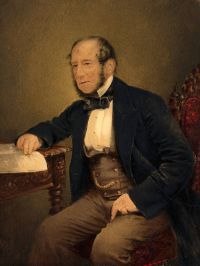
Portrait of Henry Adams Henry Adams The Education of Henry Adams — Chapter 18… (1918)

Adams had come to Washington hoping to support the Executive in a policy of breaking down the Senate, but he never dreamed that he would be required to help in breaking down the Supreme Court. Although, step by step, he had been driven, like the rest of the world, to admit that American society had outgrown most of its institutions, he still clung to the Supreme Court, much as a churchman clings to his bishops, because they are his only symbol of unity; his last rag of Right. Between the Executive and the Legislature, citizens could have no Rights; they were at the mercy of Power.
Source: Wikisource

Portrait of Henry Adams Henry Adams The Education of Henry Adams — Chapter 18… (1918)

Society is immoral and immortal; it can afford to commit any kind of folly, and indulge in any sort of vice; it cannot be killed, and the fragments that survive can always laugh at the dead; but a young man has only one chance, and brief time to seize it. Any one in power above him can extinguish the chance. He is horribly at the mercy of fools and cowards. One dull administration can rapidly drive out every active subordinate. At Washington, in 1869–70, every intelligent man about the Government prepared to go.
Source: Wikisource

Portrait of Henry Adams Henry Adams The Education of Henry Adams — Chapter 18… (1918)

Material furnished by a government seldom satisfies critics or historians, for it lies always under suspicion. Here was a mystery, and as usual, the chief mystery was the means of making sure that any mystery existed. All Adams’s great friends,—Fish, Cox, Hoar, Evarts, Sumner, and their surroundings,—were precisely the persons most mystified. They knew less than Adams did; they sought information, and frankly admitted that their relations with the White House and the Treasury were not confidential. No one volunteered advice. No one offered suggestion.
Source: Wikisource

Get perspective with Kwize: daily news enlightened by great literature