Summary

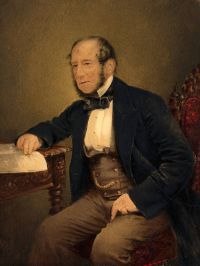
Portrait of Henry Adams Henry Adams The Education of Henry Adams — Chapter 27… (1918)

New York or Paris might be whatever one pleased,—venal, sordid, vulgar,—but society nursed there, in the rottenness of its decay, certain anarchistic ferments, and thought them proof of art. Perhaps they were; and at all events, Wagner was chiefly responsible for them as artistic emotion. New York knew better than Baireuth what Wagner meant, and the frivolities of Paris had more than once included the rising of the Seine to drown out the Etoile or Montmartre, as well as the sorcery of ambition that casts spells of enchantment on the hero.
Source: Wikisource

Portrait of Henry Adams Henry Adams The Education of Henry Adams — Chapter 27… (1918)

Education crowded upon him in immense masses as he triangulated these vast surfaces of history about which he had lectured and read for a life-time. When the historian fully realises his ignorance,—which sometimes happens to Americans,—he becomes even more tiresome to himself than to others, because his naïveté is irrepressible. Adams could not get over his astonishment, though he had preached the Norse doctrine all his life against the stupid and beer-swilling Saxon boors whom Freeman loved, and who, to the despair of science, produced Shakespeare.
Source: Wikisource

Portrait of Henry Adams Henry Adams The Education of Henry Adams — Chapter 27… (1918)

His single thought was to keep in front of the movement, and, if necessary, lead it to chaos, but never fall behind. Only the young have time to linger in the rear.
The amusements of youth had to be abandoned, for not even pugilism needs more staying-power than the labors of the pale-faced student of the Latin Quarter in the haunts of Montparnasse or Montmartre, where one must feel no fatigue at two o’clock in the morning in a beer-garden even after four hours of Mounet Sully at the Théatre Français. In those branches, education might be called closed.
Source: Wikisource

Get perspective with Kwize: daily news enlightened by great literature