Summary

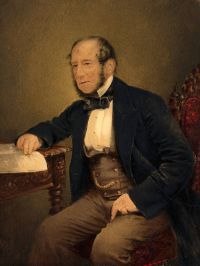
Portrait of Henry Adams Henry Adams The Education of Henry Adams — Chapter 32… (1918)

France abounds in sixteenth-century glass. Paris alone contains acres of it, and the neighborhood within fifty miles contains scores of churches where the student may still imagine himself three hundred years old, kneeling before the Virgin’s window in the silent solitude of an empty faith, crying his culp, beating his breast, confessing his historical sins, weighed down by the rubbish of sixty-six years’ education, and still desperately hoping to understand.
Source: Wikisource

Portrait of Henry Adams Henry Adams The Education of Henry Adams — Chapter 32… (1918)

Every man with self-respect enough to become effective, if only as a machine, has had to account to himself for himself somehow, and to invent a formula of his own for his universe, if the standard formulas failed. There, whether finished or not, education stopped. The formula, once made, could be but verified.
The effort must begin at once, for time pressed. The old formulas had failed, and a new one had to be made, but, after all, the object was not extravagant or eccentric. One sought no absolute truth. One sought only a spool on which to wind the thread of history without breaking it.
Source: Wikisource

Portrait of Henry Adams Henry Adams The Education of Henry Adams — Chapter 32… (1918)

PARIS after midsummer is a place where only the industrious poor remain, unless they can get away; but Adams knew no spot where history would be better off, and the calm of the Champs Elysées was so deep that when Mr. de Witte was promoted to a powerless dignity, no one whispered that the promotion was disgrace, while one might have supposed, from the silence, that the Viceroy Alexeieff had reoccupied Manchuria as a fulfilment of treaty-obligation.
Source: Wikisource

Get perspective with Kwize: daily news enlightened by great literature