Summary

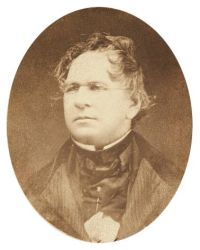
Portrait of Henry Rowe Schoolcraft Henry Rowe Schoolcraft Personal Memoirs of a Residence of Thirty Years with the Indian Tribes on the American Frontiers

A tiny sail in the distance reveals the locality of an Indian canoe. Sometimes there is a smoke on the shore. Sometimes an Indian trader returns with the avails of his winter's traffic. A gathering storm or threatening wind arises. All at once the voyageurs burst out into one of their simple and melodious boat-songs, and the gazing at vastness is relieved and sympathy at once awakened in gayety. Such are the scenes that attend the navigation of this mighty but solitary body of water. That nature has created such a scene of magnificence merely to look at, is contrary to her usual economy.
Source: Gutenberg

Portrait of Henry Rowe Schoolcraft Henry Rowe Schoolcraft Personal Memoirs of a Residence of Thirty Years with the Indian Tribes on the American Frontiers

What under the sun do the learned world suppose the Indians are made of? A man spending his time painfully to catch a beaver, or entrap an enemy, without stores of thought, without leisure, with nothing often to eat, and nothing to put on but tatters and rags, and, withal, with the whole Anglo-Saxon race treading on his toes and burning out his vitals with ardent spirits. Such is the Indian.
Source: Gutenberg

Portrait of Henry Rowe Schoolcraft Henry Rowe Schoolcraft Personal Memoirs of a Residence of Thirty Years with the Indian Tribes on the American Frontiers

The oldest man in the Ottawa nation, a chief called Nish-caud-jin-in-a, or the Man of Wrath, died this day at L'Arbre Croche, Michigan. He was between ninety and one hundred years of age, withered and dry, and slightly bent, but still preserving the outlines of a man of strength, good figure, and intellect. What a mass of reminiscences and elements of history dies with every old person of observation, white or red.
Source: Gutenberg

Get perspective with Kwize: daily news enlightened by great literature