Summary

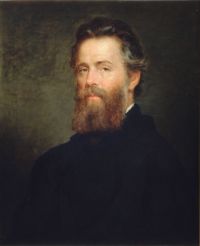
Portrait of Herman Melville Herman Melville Battle-Pieces and Aspects of the War… (1866)

Few need be reminded that, by the less intelligent classes of the South, Abraham Lincoln, by nature the most kindly of men, was regarded as a monster wantonly warring upon liberty. He stood for the personification of tyrannic power. Each Union soldier was called a Lincolnite.
Undoubtedly Sherman, in the desolation he inflicted after leaving Atlanta, acted not in contravention of orders; and all, in a military point of view, if by military judged deemed to have been expedient, and nothing can abate General Sherman's shining renown; his claims to it rest on no single campaign.
Source: Wikisource

Portrait of Herman Melville Herman Melville Battle-Pieces and Aspects of the War… (1866)

The gloomy lull of the early part of the winter of 1860-1, seeming big with final disaster to our institutions, affected some minds that believed them to constitute one of the great hopes of mankind, much as the eclipse which came over the promise of the first French Revolution affected kindred natures, throwing them for the time into doubt and misgivings universal.
Source: Wikisource

Portrait of Herman Melville Herman Melville Battle-Pieces and Aspects of the War… (1866)

Certain of Mosby's followers, on the charge of being unlicensed foragers or fighters, being hung by order of a Union cavalry commander, the Partisan promptly retaliated in the woods. In turn, this also was retaliated, it is said. To what extent such deplorable proceedings were carried, it is not easy to learn.
South of the Potamac in Virginia, and within a gallop of the Long Bridge at Washington, is the confine of a country, in some places wild, which throughout the war it was unsafe for a Union man to traverse except with an armed escort.
Source: Wikisource

Get perspective with Kwize: daily news enlightened by great literature