Summary

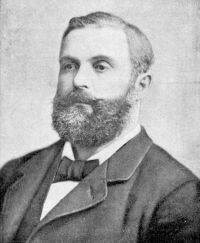
Portrait of Thomas W. Knox Thomas W. Knox Decisive Battles Since Waterloo… (1902)

There was great excitement in the city all through the afternoon, many persons desiring to go with the Confederate government and follow its fortunes. Wagons and carriages rose to an enormous price, as much as $100 in gold or Union currency being offered for a conveyance for a single day. The streets were filled with a mass of fugitives carrying trunks, boxes, and all sorts of receptacles. As a precautionary measure the City Council ordered the destruction of all intoxicating liquors in Richmond, and hundreds of barrels were rolled out and their contents poured into the gutters.
Source: Wikisource

Portrait of Thomas W. Knox Thomas W. Knox Decisive Battles Since Waterloo… (1902)

All men capable of bearing arms had gone to the war, and there was no remaining material for the formation of new armies.
Though much larger on paper, Lee's army was not over 50,000 strong in effectives, while that of Johnston could not muster more than 30,000. Against Lee, Grant could bring a force of double the number, and while the former planned to escape and join Johnston, with whom he hoped to deliver a crushing blow to the Army of the Mississippi before Grant could overtake him, the latter was quietly studying to prevent the escape.
Source: Wikisource

Portrait of Thomas W. Knox Thomas W. Knox Decisive Battles Since Waterloo… (1902)

The capitulation had been discussed among the Confederate officers on the night of the 6th around a camp-fire. General Lee was not present, but the opinion of his officers was conveyed to him by General Pendleton. The decision was unanimous that a surrender was inevitable, as the army had been terribly reduced in numbers, and the men who remained were so weakened by famine that large numbers of them had thrown away their guns, being too feeble to carry them.
Source: Wikisource

Get perspective with Kwize: daily news enlightened by great literature