Summary

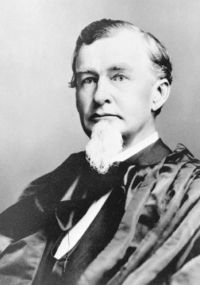
Portrait of Howell Edmunds Jackson Howell Edmunds Jackson Gottlieb v. Thatcher — Opinion of the Court

If the complainant is chargeable with that amount, and with the sum of $1,694.10, for which the property in controversy was sold under his execution sale, then the judgment of $2,170 has been more than satisfied, so that he would have no equity in this case. But, without going into that question, it is shown that every debt that Samuel H. Thatcher owed at the time of the conveyance of the property to his brother in November, 1876, was well secured.
Source: Wikisource

Portrait of Howell Edmunds Jackson Howell Edmunds Jackson Gottlieb v. Thatcher — Opinion of the Court

He further alleges that the urchase made of the property in the name of Lewis C. Thatcher, under the Kaucher execution, in January, 1878, was collusive and fraudulent as between Samuel H. and Lewis C. Thatcher; that the $3,850 paid to the sheriff at that sale, and in satisfaction of the judgment, was the money of Samuel H. Thatcher; and that the conveyance made by the sheriff to Lewis C. Thatcher was a part of the fraudulent scheme on the part of Samuel H. Thatcher to hinder, delay, and defraud the complainant in the collection of his debt.
Source: Wikisource

Portrait of Howell Edmunds Jackson Howell Edmunds Jackson Gottlieb v. Thatcher — Opinion of the Court

The question of the lien of that judgment in case of its affirmance in the appellate courts was a matter upon which there was a difference of opinion, and the appellee testifies that in view of that uncertainty he forwarded money to his brother from time to time, while the Kaucher suit was pending, for the purpose of having it in readiness to meet the judgment if it was a lien, and, in the event it was not a lien upon the property, the money could be used for the payment of the two notes which Samuel H. Thatcher held against the appellee for the original purchase money of the property.
Source: Wikisource

Get perspective with Kwize: daily news enlightened by great literature