Summary

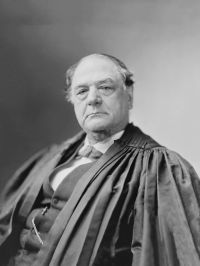
Portrait of Noah Haynes Swayne Noah Haynes Swayne Lloyd v. Fulton — Opinion of the Court

Where there is no fraud, there is no infirmity in the deed. Every case depends upon its circumstances, and is to be carefully scrutinized. But the vital question is always the good faith of the transaction. There is no other test.
Perhaps no more striking illustration can be found of the application of this principle, and of the opposition its establishment encountered, than is presented in the several cases of Van Wick v. Seward. On the 6th of November, 1817, Seward assigned a judgment to Van Wick, and gave him a guaranty that it was collectible.
Source: Wikisource

Portrait of Noah Haynes Swayne Noah Haynes Swayne Lloyd v. Fulton — Opinion of the Court

Every conveyance of real or personal estate by writing or otherwise, and every bond, suit, judgment, and execution, or contract of any description, had or made with intention to delay or defraud creditors, and such intention known to the party taking; a bona fide transaction on a valuable consideration, without notice or ground for reasonable suspicion, shall be valid.
'Every voluntary deed or conveyance, not for a valuable consideration, made by a debtor insolvent at the time of such conveyance.'
Mr. P. Phillips for the appellant.
Source: Wikisource

Get perspective with Kwize: daily news enlightened by great literature