Summary

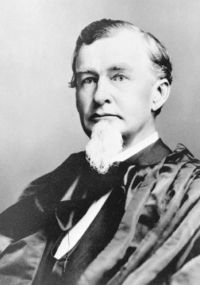
Portrait of Howell Edmunds Jackson Howell Edmunds Jackson Grant v. Walter — Opinion of the Court

It is perfectly evident that it would readily occur to any one skilled in the art that, as the skeins are increased in size or width of band, the necessity for lacing in order to preserve the form, and keep the skein in a condition for dyeing, would be correspondingly increased, and that the looser the lacing the more perfect would be the dyeing. Such changes in degree, merely, would not constitute an invention.
Source: Wikisource

Portrait of Howell Edmunds Jackson Howell Edmunds Jackson Grant v. Walter — Opinion of the Court

It is said by one of complainant's witnesses that such loose lacing as is insisted upon as a requisite for effective dyeing is neither shown in the drawings, nor in the specification, nor claims, but that it should be read into the patent because 'a man that understands his business must know that it must be laced loosely, or that the silk would be spoiled in dyeing,' and that if this were not noticed, or not known, it would be taught him by the first experiment.
Source: Wikisource

Portrait of Howell Edmunds Jackson Howell Edmunds Jackson Grant v. Walter — Opinion of the Court

The circuit court held that the claims of the patent covered a product, and not a process, and that the patent was void for want of patentable novelty, for the reason that the form of skein described in the specification, and covered by the claims, was well known, and in use, long prior to Grant's invention, which consisted in the method of dyeing and winding silk by the use of such well-known form of skein, and not in the skein itself, and, if valid to any extent, it was only upon the process.
Source: Wikisource

Get perspective with Kwize: daily news enlightened by great literature