Summary

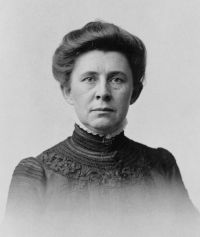
Portrait of Ida Tarbell Ida Tarbell The History of the Standard Oil Company… (1904)

There must be nothing—nothing in his great machine he did not know to be working right. It was to complete this ideal, to satisfy this necessity, that he undertook, late in the seventies, to organise the oil markets of the world, as he had already organised oil refining and oil transporting. Mr. Rockefeller was driven to this new task of organisation not only by his own curious intellect; he was driven to it by that thing so abhorrent to his mind—competition.
Source: Wikisource

Portrait of Ida Tarbell Ida Tarbell The History of the Standard Oil Company… (1904)

Rockefeller's foundation principle that the oil business belongs to him, any competition is "an aggravated case." All that is reassuring in the situation has come from the obstinate stand of individuals—the refiners who insisted on doing an independent business, on the theory that "this is a free country"; the grocers who resented the prying and bullying of Standard agents, and asserted their right to buy of whom they would; the rare, very rare, community that grasped the fact that oil sold below cost temporarily, meant later paying for the fight.
Source: Wikisource

Portrait of Ida Tarbell Ida Tarbell The History of the Standard Oil Company… (1904)

Prodded constantly by letters and telegrams from superiors to secure the countermand of independent oil, confronted by statements of the amount of sales which have gotten away from him, information he knows only too well to have been secured by underhand means, obliged to explain why he cannot get this or that trade away from a rival salesman, he sinks into habits of bullying and wheedling utterly inconsistent with self-respect. "Is there nothing you independents can do to prevent our people finding out who you sell to?" an independent dealer reports a hunted Standard agent asking him.
Source: Wikisource

Get perspective with Kwize: daily news enlightened by great literature