Summary

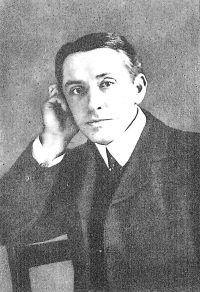
Portrait of J. S. Fletcher J. S. Fletcher Ravensdene Court — 16. The Pathless Wood (1922)

He sniffed now, and Lorrimore went on—to a peroration.
"There can be no doubt about it!" he said with emphasis. "A Blyth man, a seafarer, named Solomon Fish, chances to be in Hull and, in a tavern there which is evidently the resort of sea-faring folk, sees a man whom he instantly recognizes as Netherfield Baxter, whom he had known as child, boy and young man. He accosts him—the man denies it. We need pay no attention whatever to that denial: we may be quite sure from the testimony of Fish that the man is Baxter. Now then, what is Baxter doing?
Source: Wikisource

Portrait of J. S. Fletcher J. S. Fletcher Ravensdene Court — 16. The Pathless Wood (1922)

But we know that, whatever happened to the Elizabeth Robinson, and to the rest of the crew, certain men who were on board her when she left Hong-Kong, for Chemulpo, did escape whatever catastrophe occurred. The Elizabeth Robinson may be at the bottom of the Yellow Sea, and most of her folk with her. But in course of time Noah Quick turns up at Devonport in England, in possession, evidently, of plenty of money. He takes a licensed house, runs it on highly respectable lines, and comports himself as a decent member of society; also he prospers, and has a very good balance at his bankers.
Source: Wikisource

Portrait of J. S. Fletcher J. S. Fletcher Ravensdene Court — 16. The Pathless Wood (1922)

I said in conclusion, "and if anybody can make head or tail of it and get a definite and dependable theory, I am sure that Scarterfield, from a professional standpoint, will be glad to hear whatever can be said."
"It seems to me that Scarterfield is on the high road to a very respectable theory already," remarked Lorrimore. "So are you! The thing—to me—appears to be fairly plain. It starts out with the association of Baxter and the dishonest bank-manager.
Source: Wikisource

Get perspective with Kwize: daily news enlightened by great literature