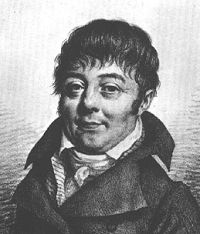
Jacques Labillardière

Jacques Labillardière

Summary

Portrait of Jacques Labillardière Jacques Labillardière Voyage in Search of La Perouse… (1800)

We all of us pitied the poor flying-fish when we observed the astonishing skill of its enemy, which very seldom misses its aim. As the flying-fish raises itself but to a very small distance from the surface of the sea, the pelican would run the risk of falling into the water, did it not possess the art of breaking its fall by suddenly expanding its wings, so as to be immediately able to mount again in quest of another victim.
Source: Wikisource

Portrait of Jacques Labillardière Jacques Labillardière Voyage in Search of La Perouse… (1800)

The pelican is known to be a great destroyer of the flying-fish. As soon as it espies one of these fishes, it descends from the more elevated regions of the atmosphere, and remains hovering about fifty toises above the surface of the water, in order to seize its prey whenever it quits the sea. All the motions of the pelican are conducted with admirable dexterity: it does not dart head foremost, like most other birds that seek their food in the water
Source: Wikisource

Portrait of Jacques Labillardière Jacques Labillardière Voyage in Search of La Perouse… (1800)

The captain of the Esperance having ordered an half of a very fine tunny to be tied to a buoy and thrown into the water, as a present to our Commander; it did not float near enough to our vessel to enable us to take it up, when one of the sailors plunged into the sea in order to swim after it, although it was known that a shark had been caught that very morning by the crew of the Esperance; and the calmness of the weather afforded an additional ground of apprehension, lest one of our best seamen might fall a prey to another of these animals.
Source: Wikisource

Get perspective with Kwize: daily news enlightened by great literature