Summary

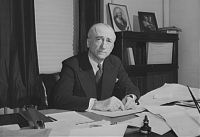
Portrait of James F. Byrnes James F. Byrnes United States v. Emory — Opinion of the Court

There is nothing to show a further intention that the United States should relinquish its priority as to claims against defaulting and insolvent borrowers whose notes it takes up from the lending institution pursuant to the insurance contract. That is, the ultimate collection of bad loans was consigned to the United States rather than to the lending institutions, but the collecting power of the United States was neither abridged nor qualified.
Source: Wikisource

Portrait of James F. Byrnes James F. Byrnes United States v. Emory — Opinion of the Court

Private persons in general are reluctant to extend credit when they know that in the event of the borrower's insolvency the claims of the United States will receive priority, and this circumstance is particularly undesirable in times of economic stress. In the first place, whatever may be the merits of the contention, it should be addressed to Congress and not to this Court.
Source: Wikisource

Portrait of James F. Byrnes James F. Byrnes United States v. Emory — Opinion of the Court

Assurance of repayment was rested not on a combination of security and earning power but deliberately upon earning power alone. [31] Whereas with the railroads interest corresponding to the risk was charged, no premium was charged for the insurance of loans under Title I, with the expectation that the government would pay the loss as its contribution to recovery. [32] The declared purpose of the United States to absorb the losses of the lenders is clearly inconsistent with the priority over other creditors given by § 3466.
Source: Wikisource

Get perspective with Kwize: daily news enlightened by great literature