Summary

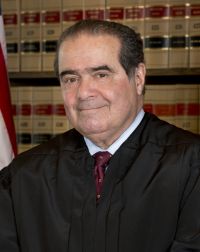
Portrait of Antonin Scalia Antonin Scalia Dewsnup v. Timm — Dissenting Opinion

A secured creditor holding a lien on property that is completely worthless would not face lien avoidance under § 506 (d) , even if the claim secured by that lien were disallowed entirely. The same would be true of a lien on property that has some value but is obviously inadequate to cover all of the disallowed claim: the lien would be voided only to the extent of the property's value at the time of the bankruptcy court's evaluation, and could be asserted against any increase in the value of the property that might later occur, in order to satisfy the disallowed claim.
Source: Wikisource

Portrait of Antonin Scalia Antonin Scalia Dewsnup v. Timm — Dissenting Opinion

But the fact that the statute makes no exceptions to invalidation by reason of inadequate security in no way establishes that such (plainly expressed) invalidation does not exist. The premise of the argument-that if a statute qualifies a noun with two adjectives ("allowed" and "secured") , and provides exceptions with respect to only one of the adjectives, then the other can be disregarded-is simply false. The most that can be said is that the two exceptions in § 506 (d) do not contradict the United States' and respondents' interpretation; but they in no way suggest or support it.
Source: Wikisource

Portrait of Antonin Scalia Antonin Scalia Dewsnup v. Timm — Dissenting Opinion

With exceptions not pertinent here, § 506 (d) of the Bankruptcy Code provides: "To the extent that a lien secures a claim against the debtor that is not an allowed secured claim, such lien is void. . . ." Read naturally and in accordance with other provisions of the statute, this automatically voids a lien to the extent the claim it secures is not both an "allowed claim" and a "secured claim" under the Code.
Source: Wikisource

Get perspective with Kwize: daily news enlightened by great literature