Summary

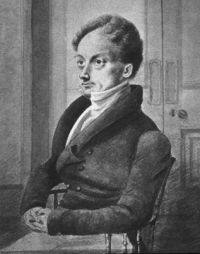
Portrait of James Mill James Mill,  Jurisprudence — Section VI. (1825)

“ In those cases in which, without a call for punishment, the authoritative termination of a dispute was all that was required, the experience of what was necessary, not only for any degree of mutual comfort, but even for the means of subsistence, soon established a few leading points of uniformity. Thus, when a man had cultivated a piece of ground, which belonged to nobody more peculiarly than to himself, it was evidently necessary that the crop should be considered as belonging to him; otherwise, no crops would be raised, and the community would be deprived of the means of subsistence. ”
Source: Wikisource

Portrait of James Mill James Mill,  Jurisprudence — Section VI. (1825)

“ As a guard against the danger of deception, it is equally certain that no evidence ought ever to be excluded. An account of all the reasons by which the absurdity of exclusion on this ground is demonstrated, and of the wide and deplorable mischief which, in the vulgar systems, is produced by it, would be far too extensive for the contracted limits of the present discourse. Reasons, however, decisive of the question, present themselves so obviously, that hardly any man, with an ordinary understanding, not fettered by prejudice, can look at the subject without perceiving them. ”
Source: Wikisource

Portrait of James Mill James Mill,  Jurisprudence — Section VI. (1825)

“ Whenever the legislature has accurately determined what are the facts which shall give commencement, and what those which shall give termination to a right, the whole confused and intricate mass of what in English law is called Pleading, reduces itself to those clear and simple elements. A begins, by affirming some one of the facts which gives commencement to a right. ”
Source: Wikisource

Get perspective with Kwize: daily news enlightened by great literature