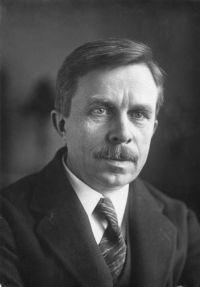
James Thomson Shotwell

James Thomson Shotwell

Summary

Portrait of James Thomson Shotwell James Thomson Shotwell 1911 Encyclopædia Britannica, Volume 17… (1911)

But the king’s shrewdness triumphed before long over his vengeance, and the more serviceable of the officers of Charles VII. were for the most part soon reinstated, Louis’ advisers were mostly men of the middle class. He had a ready purse for men of talent, drawing them from England, Scotland, Italy, Spain and Portugal. Such a motley throng of competent men had never before been seen at the court of France.
Source: Wikisource

Portrait of James Thomson Shotwell James Thomson Shotwell 1911 Encyclopædia Britannica, Volume 17… (1911)

The dissatisfied nobility found their greatest ally in Charles the Bold, afterwards duke of Burgundy, and in 1465 formed a “league of public welfare” and declared war on their king. The nominal head was the king’s brother Charles, duke of Berry, then eighteen years old, a weak character, the tool of the rebels as he was later the dupe of the king. Every great noble in France was in the league, except Gaston de Foix—who kept the south of France for the king,—and the counts of Vendôme and Eu. The whole country seemed on the verge of anarchy.
Source: Wikisource

Portrait of James Thomson Shotwell James Thomson Shotwell 1911 Encyclopædia Britannica, Volume 17… (1911)

On the other hand, Louis granted privileges to the towns and consistently used their alliance to overthrow the nobility. He watched the roads, built new ones, opened markets, protected the only bankers of the country, the Jews, and reorganized the administration so as to draw the utmost revenue possible from the prosperity thus secured. His ambition led him into foreign entanglements; he made a secret treaty with the duke of Savoy which was to give him right of way to Genoa, and made arrangements for a partition of the duchy of Milan.
Source: Wikisource

Get perspective with Kwize: daily news enlightened by great literature