Summary

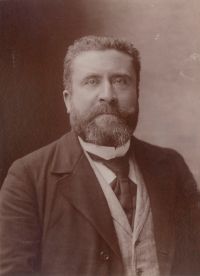
Portrait of Jean Jaurès Jean Jaurès Studies in Socialism — I: The Socialist Aim (1906)

Not one should be in danger of becoming the prey or the instrument of another individual. Not one should be deprived of the sure means of labouring freely without servile dependence on any other individual.
In the nation, therefore, the rights of all individuals are guaranteed, to-day, to-morrow, and for ever. If we transfer what was once the property of the capitalist class to the national community, we do not do this to make an idol of the nation, or to sacrifice to it the liberty of the individual. No, we do it that the nation may serve as a common basis for all individual activities.
Source: Wikisource

Portrait of Jean Jaurès Jean Jaurès Studies in Socialism — I: The Socialist Aim (1906)

To have responsibility without authority, to be punished without having been even consulted, such is the paradoxical fate of the proletariat under the capitalist disorder. And if capital were organised, if by means of vast trusts it were able to regulate production, it would only regulate it for its own profit. It would abuse the power gained by union to impose usurious prices on the community of buyers, and the working class would escape from economic disorder only to fall under the yoke of monopoly.
Source: Wikisource

Portrait of Jean Jaurès Jean Jaurès Studies in Socialism — I: The Socialist Aim (1906)

Therefore, in our present society, the work of the workers is not their exclusive property. And since, in our society founded on intensive production, economic activity is an essential function of every human being, since work forms an integral part of personality, the proletarian does not own his own body absolutely. The proletarian alienates a part of his activity, that is, a part of his being, for the profit of another class. The rights of man are incomplete and mutilated in him.
Source: Wikisource

Get perspective with Kwize: daily news enlightened by great literature