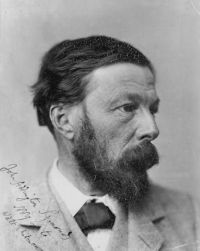
John Addington Symonds

John Addington Symonds

Summary

Portrait of John Addington Symonds John Addington Symonds 1911 Encyclopædia Britannica, Volume 18… (1911)

The poet at this juncture revealed his own essential feebleness of character. To La Romanina he owed almost everything as a man and as an artist. But he was ashamed of her and tired of her. He vowed she should not come to Vienna, and wrote dissuading her from the projected visit. The tone of his letters alarmed and irritated her. It is probable that she set, out from Rome, but died suddenly upon the road. All we know is that she left him her fortune after her husband’s life interest in it had expired, and that Metastasio, overwhelmed with grief and remorse, immediately renounced the legacy.
Source: Wikisource

Portrait of John Addington Symonds John Addington Symonds 1911 Encyclopædia Britannica, Volume 18… (1911)

Gifted himself with extraordinary facility in composition, and with a true poetic feeling, he found no difficulty in producing plays which, while beautiful in themselves, judged merely as works of literary art, became masterpieces as soon as their words were set to music, and rendered by the singers of the greatest school of vocal art the world has ever seen.
Source: Wikisource

Portrait of John Addington Symonds John Addington Symonds 1911 Encyclopædia Britannica, Volume 18… (1911)

Reading Metastasio in the study, it is impossible to do him justice. But the conventionality of all his plots, the absurdities of many of his situations, the violence he does to history in the persons of some leading characters, his “damnable iteration” of the theme of love in all its phases, are explained and justified by music.
Metastasio resided with La Romanina and her husband in Rome. The generous woman, moved by an affection half maternal half romantic, and by a true artist’s admiration for so rare a talent, adopted him more passionately even than Gravina had done.
Source: Wikisource

Get perspective with Kwize: daily news enlightened by great literature