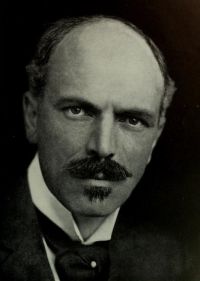
Giovanni Battista Marino

Definition and stakes

Giorgio Vasari Lives of the Most Excellent Painters… (1850)

At length, and after he had remained three years in Florence, he returned to his father, who was then occupied with the construction of the church of San Giovanni Battista in Pesaro; then the father perceived by the drawings of Bartolommeo that his son acquitted himself much better in architecture than in painting, and it appeared to him that he had a very fair aptitude to that vocation.
Source: Wikisource

Francis Henry Cliffe A Manual of Italian Literature

He enjoyed full leisure to complete his Adone, and when it was published in 1623, it fully satisfied the expectations of his admirers. He returned to his native city of [Pg 115] Naples, where a magnificent ovation awaited him. He did not, however, live long to enjoy his triumph, and Italy had to mourn his loss in 1625.
Marino exactly hit the taste of his contemporaries, and the praises lavished upon him are almost incredible in their exaggeration. The poet Claudio Achillini wrote to him from Bologna: "There is not a doubt in my mind that you are the greatest poet the world has ever seen."
Source: Gutenberg

Giorgio Vasari Lives of the most Eminent Painters Sculptors and Architects…

The same Giovan Battista made many designs and ground-plans of various fortifications for places in the states of his Excellency, and also various rough models in clay, which are in the possession of the Lord Duke. And since San Marino was a man of fine genius and very studious, he wrote a little book on the methods of fortifications; which work, a beautiful and useful one, is now in the possession of Messer Bernardo Puccini, a gentleman of Florence, who learned many things with regard to the matters of architecture and fortification from San Marino, who was much his friend.
Source: Gutenberg

Get perspective with Kwize: daily news enlightened by great literature