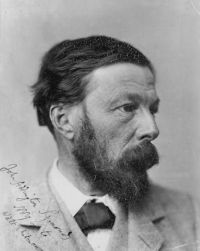
John Addington Symonds

John Addington Symonds

Summary

Portrait of John Addington Symonds John Addington Symonds Encyclopædia Britannica, Ninth Edition (1888)

At the age of thirty-one the Gerusalemme, as we have it, was accomplished. The world too was already ringing with the music of Aminta. More than this Tasso had not to give to literature. But those succeeding years of derangement, exile, imprisonment, poverty, and hope deferred endear the man to us. Elegiac and querulous as he must always appear, we yet love Tasso better because he suffered through nearly a quarter of a century of slow decline and unexplained misfortune.
Source: Wikisource

Portrait of John Addington Symonds John Addington Symonds Encyclopædia Britannica, Ninth Edition (1888)

We may regard it as the most decisively important of Tasso's compositions, for its influence, in opera and cantata, was felt through two successive centuries. The Gerusalemme Liherata occupies a larger space in the history of European literature, and is a more considerable work. Yet the commanding qualities of this epic poem, those which revealed Tasso's individuality, and which made it immediately pass into the rank of classics, beloved by the people no less than by persons of culture, are akin to the lyrical graces of Aminta.
Source: Wikisource

Portrait of John Addington Symonds John Addington Symonds Encyclopædia Britannica, Ninth Edition (1888)

But Tasso’s restless spirit drove him forth to Florence. The Florentines said, Actum est de eo.” Borne once more, then Mantua, then Florence, then Borne, then Naples, then Borne, then Naples — such is the weary record of the years 1590—94. We have to study a verit- able Odyssey of malady, indigence, and misfortune. To Tasso everything came amiss. He had the palaces of princes, cardinals, patriarchs, nay popes, always open to him.
Source: Wikisource

Get perspective with Kwize: daily news enlightened by great literature