Summary

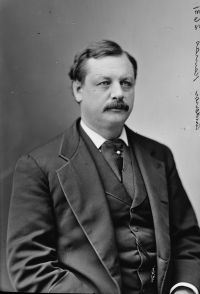
Portrait of John Alexander Anderson John Alexander Anderson The Train Wire: A Discussion of the Science of Train Dispatching

It is claimed that a considerable experience has demonstrated that this plan is feasible and secures the object in view, and that with it the rule of always first securing the superior train may be made absolute. Experience is one of the best of teachers, and few theories can be taken as proved without it, but even imperfect methods may produce good results under careful management, so that experience alone is not sufficient for determining the merits of a system.
Source: Gutenberg

Portrait of John Alexander Anderson John Alexander Anderson The Train Wire: A Discussion of the Science of Train Dispatching

In more recent years the weight of opinion has been that in all systems of danger signals the normal position, and that to which such signals should automatically move, is that indicating danger. So arranged, the indicator will always be in a position to stop trains unless it is moved to another position to show that there are no orders for them. It becomes a standing order to "hold," and, when an order is forwarded for a train, the fact of its receipt requires that the signal be simply left in its normal position and the train thus stopped.
Source: Gutenberg

Portrait of John Alexander Anderson John Alexander Anderson The Train Wire: A Discussion of the Science of Train Dispatching

There is nothing but the care and skill of the Dispatcher to prevent the opposing orders from differing in some particular. When we consider the care necessary in preparing a time-table, to properly show the running time and meeting-places of the several trains, we must see that the risk, in the process described, of getting something wrong, must far outweigh any supposed convenience in a train having an order showing a continuous schedule of its meeting-points for several opposing trains.
Source: Gutenberg

Get perspective with Kwize: daily news enlightened by great literature