Summary

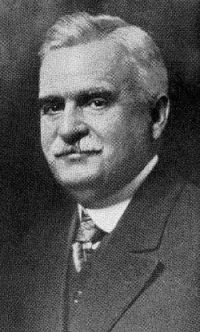
Portrait of Charles De Lano Hine Charles De Lano Hine Letters from an Old Railway Official to His Son…

We railroad men have to think and act in such a hurry that we become very cocksure of ourselves. We have so little time for introspection that we often regard the science of railroading as putting it on the other fellow. When disaster occurs, no matter how defective may have been our equipment, how parsimonious our policy, how lax our discipline, we cry out long and loud at the untrustworthiness of employes, at the decadence of company spirit, at the growing evils of the labor unions.
Source: Gutenberg

Portrait of Charles De Lano Hine Charles De Lano Hine Letters from an Old Railway Official to His Son…

It is longer than a train of ore jimmies, and broader than a box vestibule. It is a bridge too close to the track for the telltales to sting your face in time to get off a furniture car. Like the ostrich, believing itself hidden with its head stuck in the sand, we feel that if we call them committees of our employes we are not recognizing the union. Is this consistent? We claim, and justly so, that a high principle is involved; that if we recognize the union we practically force every man to join, regardless of his own inclinations and of his freedom as an American citizen.
Source: Gutenberg

Portrait of Charles De Lano Hine Charles De Lano Hine Letters from an Old Railway Official to His Son…

To come down to a congested yard among a lot of discouraged men blocked in without room to sidetrack a handcar is like sitting down to a train sheet with most of the trains tied up for orders. In either case let the right man take hold and in a few minutes the men involved will tell you who it is has assumed charge. Without realizing it and without knowing why, they redouble their efforts; things begin to move, and the incident goes down in the legends of the division to be the talk of the caboose and the roundhouse for years to come.
Source: Gutenberg

Get perspective with Kwize: daily news enlightened by great literature