“ On every hand the level brown prairie stretches away to the horizon. The groups of farm buildings are from one half to a mile apart and look as lonely as ships at sea. Spots and streaks of snow here and there, fallen this morning. A few small tree plantations, but no green thing; farmers plowing and sowing wheat; straw stacks far and near; miles of corn stubble, now and then a lone school house; the roads a black line fading away in the distance, the little villages shabby and ugly. When the train stops for water a crowd of men, women, and children make a rush for the President's car. ”
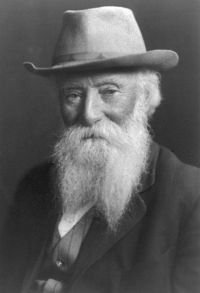
John Burroughs
Summary
John Burroughs’ My Boyhood is a reflective memoir chronicling his formative years on a rural farm in the Catskill Mountains, capturing the rhythms of agrarian life and the stark beauty of the natural world. Through vivid depictions of fields, barns, and seasonal labor, Burroughs explores themes of familial bonds, the contrast between rural simplicity and urban modernity, and the lasting impact of the land on personal identity.
Central to the narrative is his relationship with his father, a former farmer turned literary craftsman, whose love for nature and commitment to writing shape Burroughs’ own appreciation for the interconnectedness of life and art. The work unites the quiet dignity of rural existence with the introspective legacy of a man who transformed his origins into enduring literary expression.
Quotes from My Boyhood (John Burroughs)
“ Mother had the self-consciousness of the Celt, Father not at all, though he had the Celtic temperament: red hair and freckles! The red-haired, freckled, harsh-voiced little man made a great deal of noise about the farm—shouting at the stock, sending the dog after the cows or after the pigs in the garden, or calling his orders to us in the field or shouting back his directions for the work after he had started for the Beaver Dam village. But his bark was always more to be feared than his bite. ”
“ Often Father tried to account for himself, how he happened to break away from the life of his family and early environment so absolutely and completely and become, not a weak, easy-going, though picturesque farmer in the farther Catskills, but a man of letters, a unique and picturesque literary craftsman. "I had it in my blood, I guess," he once said. With it he had what most of us have, the love of the woods and fields and the hunting and fishing. Trout fishing, the most delightful of all, had for him a perennial charm, and bee-hunting, too, and camping out, exploring new streams and woods. ”
