Summary

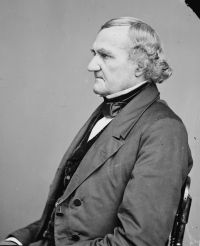
Portrait of John Catron John Catron Bell v. Bruen — Opinion of the Court

The construction contended for as the true one on part of the plaintiffs, is, That the letter of the defendant must be taken in the broadest sense which its language allows; thereby, to widen its application. To assert this as a general principle, would so often, and so surely, violate the intention of the guarantor, that it is rejected. We think the court should adopt the construction which, under all the circumstances of the case, ascribes the most reasonable, probable, and natural conduct to the parties.
Source: Wikisource

Portrait of John Catron John Catron Bell v. Bruen — Opinion of the Court

The doctrine of construction never arises until some ambiguity exists. Bruen, the son, had the entire confidence of his father, as the powers of attorney show. If the words, 'any and every, &c.' do not mean what we say, they mean nothing. 'Any' means 'some'-every' takes in all, and what does 'other' mean? 3 Camp. 220.
What was the construction that Bell and Grant placed upon it? Their letter shows, and if defendant thought it was not the correct one, he ought so to have informed them.
Source: Wikisource

Portrait of John Catron John Catron Bell v. Bruen — Opinion of the Court

Where a mercantile guarantee, is preceded by a recital, definite in its terms; and to which the general words obviously refer, the same rule applies, of limiting the liability, within the terms of the recital, in restraint of the general words. We find the courts constantly referring to the cases arising on bonds with conditions, for the rule of construction, and applying it to commercial guarantees; the most approved text writers on this subject do the same: does the engagement before us fall within the rule?
Source: Wikisource

Get perspective with Kwize: daily news enlightened by great literature