Summary

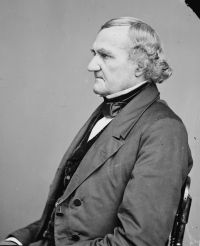
Portrait of John Catron John Catron Gaines v. Hennen — Dissent

Possession of itself is, in the nature of men and things, an indiceum of ownership. If all persons acquiesce in the possession, the acquiescence tends to prove property in the possessor; and after the lapse of thirty years the probabilities so increase, that courts of justice, for the safety of society, hold an adverse claim to be without foundation. He who thirty years ago may have been abundantly able to show regularity of proceedings and evidence of ownership, may be unable to do so now.
Source: Wikisource

Portrait of John Catron John Catron Gaines v. Hennen — Dissent

Clark's failure was very large; his estate was wholly insolvent. The purchasers have in fact paid his debts to a large amount. Many of them are yet unpaid. The purchasers have built houses and raised families on the property now sought to be recovered. A city has been built upon it. It has probably increased in value five hundred fold since 1820; much of it certainly has.
That the respondents have been harassed with a previous lawsuit for the same property, in which the complainant claimed as heir, and was defeated, neither helps her case nor lessens the hardships imposed on the respondents.
Source: Wikisource

Portrait of John Catron John Catron Gaines v. Hennen — Dissent

Holding back an existing will and making an experiment on the issue of heirship, requiring the same proof, and, in case of failure, to bring a second suit on the established will, is a mere contrivance, and an evasion of the due administration of justice, which cannot be allowed. On the will of 1813 the present bill is founded. By that will Daniel Clark declares the complainant, Myra, to be his only legitimate and lawful heir, and devises to her all his estate.
Source: Wikisource

Get perspective with Kwize: daily news enlightened by great literature