Summary

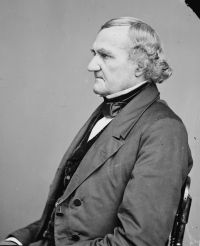
Portrait of John Catron John Catron McCabe v. Worthington — Opinion of the Court

The land sued for is comprehended within the limits of the survey, and in the patent of Soulard's widow and heirs. No notice in writing, stating the nature and extent of his claim, was ever delivered by Soulard to the Recorder of Land Titles under any of the acts of Congress in relation to that subject. The defendant relied on patents from the United States issued in the year 1836, founded on entries made in the year 1834, while the case of Soulard, widow and heirs, against the United States, was pending in the Supreme Court; which patents embraced the land in controversy.
Source: Wikisource

Portrait of John Catron John Catron McCabe v. Worthington — Opinion of the Court

But it is said that the filing of his petition for confirmation, by Soulard, in the District Court, was notice, and that no one could purchase the land in prejudice of his right.
The rule here invoked is this: When a party commences judicial proceedings for the purpose of establishing his right to a particular piece of property, no one is permitted to purchase that property of another, and claim to be an innocent purchaser, without notice. The pendency of his suit is notice of all the right the plaintiff has.
Source: Wikisource

Portrait of John Catron John Catron McCabe v. Worthington — Opinion of the Court

It was then a part of the residue that the statute contemplated might be decreed to him, when it had already been sold by the United States, and it was this for which this section provided. To give the act this construction leaves it in harmony with all the legislation of Congress on the subject. It has been the uniform policy of Congress to protect those to whom they have sold for a valuable consideration.
Source: Wikisource

Get perspective with Kwize: daily news enlightened by great literature