Summary

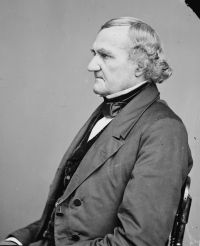
Portrait of John Catron John Catron Springfield v. Quick — Opinion of the Court

The same power that can rightly divert a revenue enjoyed by peculiar localities, and disburse it throughout an entire State, most certainly possesses a sufficient authority, over her own internal affairs, to take into consideration other funds, in her efforts at placing all upon a uniform basis as it respects the means of educating her people.
The idea of attaching to the Congressional township fund a degree of sacredness that renders its very contemplation by the State an unpardonable offence, is a creature of imagination, unsupported by any authority whatever.
Source: Wikisource

Portrait of John Catron John Catron Springfield v. Quick — Opinion of the Court

It being a well-settled principle that the power of a State to levy taxes, to create a revenue for any specified object, is an incident of sovereignty, and only restricted by constitutional inhibitions; and there being no such constitutional prohibition the sense of honor, justice, and equity, of a State alone defining the limits within which that power shall be exercised-what feature of the law in question can be said to exceed the authority of the State?
Source: Wikisource

Portrait of John Catron John Catron Springfield v. Quick — Opinion of the Court

In the Constitution of the State of Indiana, there is no feature, the appellees insist, prohibiting the levying and collecting of taxes such as contemplated by the school law in question. And that a necessary incident to the power to create a revenue is the power to disburse it; to apply it to the wants of the community in which it was raised. The Constitution of the State being silent as to the mode of distributing the common school fund, that burden was necessarily cast upon the Legislature.
Source: Wikisource

Get perspective with Kwize: daily news enlightened by great literature