Summary

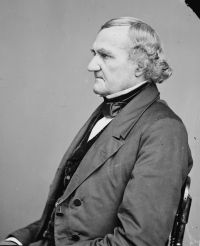
Portrait of John Catron John Catron United States v. Boisdoré, 52 U.S. 63…

We have no authority to exercise political jurisdiction and to grant, as the governors of Spain had, and as Congress has. If we were to locate by survey the land claimed at random, in some part of the district of country known as Achoucoupoulous, exercising our discretion as respects the proper place, and to decree on our own survey, and thus divest the United States of title, then we should do what Congress has often done when surveys were ordered of claims founded on settlement, and what a Spanish governor usually did on the return of a survey; we should exercise the granting power
Source: Wikisource

Portrait of John Catron John Catron United States v. Boisdoré, 52 U.S. 63…

By the act of 1824, we are required to exercise the power of a court of equity, and to adjudge in the given case whether a court of equity could, according to the rules and laws of Spain, consider the conscience of the king so affected by the acts of his lawful authorities in the province, that he became a trustee for the claimant, and held the land claimed by an equity upon it, amounting to a severance of so much from the public domain, before and at the time the country was ceded to the United States.
Source: Wikisource

Portrait of John Catron John Catron United States v. Boisdoré, 52 U.S. 63…

If the establishment had been commenced in 1783, when the grant was made, (and we are bound to hold that it had, as the petition to the Governor alleges the fact,) then it is hardly possible that it could have been on a smaller scale than it ever after continued; there being but a single slave there at any time. It could only have been less, by having no one at all on the premises. It is therefore manifest, that no additional possession was taken by Boisdoré or his representatives, in compliance with the terms of his contract, after its date.
Source: Wikisource

Get perspective with Kwize: daily news enlightened by great literature