Summary

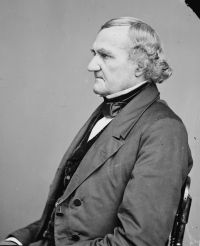
Portrait of John Catron John Catron Argote v. United States — Opinion of the Court

In Bethune's case the grant was 'on the express condition, that he is to set up said machine within the time which I grant him.' And in Kingsley's case, 'but upon the express condition that, until he builds said machine, this concession will be considered as not made, and of no value nor effect, until the happening of that event.' In this case the grant is without condition. It gives authority to build a mill, and it grants 16,000 acres of land, but does not require the mill to be built, nor make the one dependent on the other. The building of a mill is not a condition precedent or subsequent.
Source: Wikisource

Portrait of John Catron John Catron Argote v. United States — Opinion of the Court

Governor Coppinger had no power to alter the terms of the concession after the 24th of January, 1818. The right of the grantee was protected by the treaty, and could not be disturbed by the Spanish authorities after that time. If he had the power to limit, he must have had the correlative power to enlarge, the time, and thus in effect to make a new grant. But the grant was absolute, not on condition of building a mill. If there had been a condition unlimited as to time, the utmost that could be done would be, to require that it should be done in a reasonable time.
Source: Wikisource

Get perspective with Kwize: daily news enlightened by great literature