Summary

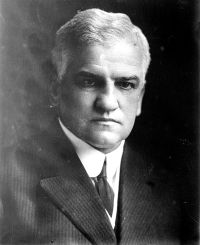
Portrait of John Hessin Clarke John Hessin Clarke Minerals Separation v. Hyde — Opinion of the Court

The composition of ores varies infinitely, each one presenting its special problem, and it is obviously impossible to specify in a patent the precise treatment which would be most successful and economical in each case. The process is one for dealing with a large class of substances and the range of treatment within the terms of the claims, while leaving something to the skill of persons applying the invention, is clearly sufficiently definite to guide those skilled in the art to its successful application, as the evidence abundantly shows.
Source: Wikisource

Portrait of John Hessin Clarke John Hessin Clarke Minerals Separation v. Hyde — Opinion of the Court

It is true that oil is one of the substances used, but it is used in quantities much smaller than was ever heard of, and it produces a result never obtained before. The minerals are obtained in a froth of a peculiar character, consisting of air bubbles which, in their covering film, have the minerals embedded in such manner that they form a complete surface all over the bubbles.
Source: Wikisource

Portrait of John Hessin Clarke John Hessin Clarke Minerals Separation v. Hyde — Opinion of the Court

Prior to the date of the patent in suit a number of patents had been granted in this and other countries for processes aiming to make practical use of this property of oil and of oil mixed with acid in the treatment of ores, all of which, speaking broadly, consisted in mixing finely crushed or powdered ore with water and oil, sometimes with acid added, and then in variously treating the mass-'the pulp'-thus formed so as to separate the oil, when it became impregnated or loaded with the metal and metal-bearing particles, from the valueless gangue.
Source: Wikisource

Get perspective with Kwize: daily news enlightened by great literature