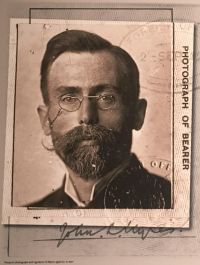
 John Linton Myres,
1911 Encyclopædia Britannica, Volume 21…
(1911)
John Linton Myres,
1911 Encyclopædia Britannica, Volume 21…
(1911)
“ Ephorus, relying on Hesiodic tradition of an aboriginal Pelasgian type in Arcadia, elaborated a theory of the Pelasgians as a warrior people spreading (like “Aryans”) from a “Pelasgian home,” and annexing and colonizing all the parts of Greece where earlier writers had found allusions to them, from Dodona to Crete and the Troad, and even as far as Italy, where again their settlements had been recognized as early as the time of Hellanicus, in close connexion once more with “Tyrrhenians.” ”
