Summary

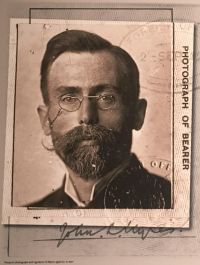
Portrait of John Linton Myres John Linton Myres 1911 Encyclopædia Britannica, Volume 8… (1911)

The social and political structure of the Dorian states of Peloponnese presupposes likewise a conquest of an older highly civilized population by small bands of comparatively barbarous raiders. Sparta in particular remained, even after the reforms of Lycurgus, and on into historic times, simply the isolated camp of a compact army of occupation, of some 5000 families, bearing traces still of the fusion of several bands of invaders, and maintained as an exclusive political aristocracy of professional soldiers by the labour of a whole population of agricultural and industrial serfs.
Source: Wikisource

Portrait of John Linton Myres John Linton Myres 1911 Encyclopædia Britannica, Volume 8… (1911)

Language is no better guide, for it is not clear that the Dorian dialect is that of the most recent conquerors, and not rather that of the conquered Achaean inhabitants of southern Greece; in any case it presents no such affinities with any non-Hellenic speech as would serve to trace its origin. Even in northern and west-central Greece, all vestige of any former prevalence has been obliterated by the spread of “Aeolic” dialects akin to those of Thessaly and Boeotia
Source: Wikisource

Portrait of John Linton Myres John Linton Myres 1911 Encyclopædia Britannica, Volume 8… (1911)

Most non-Dorian Greeks, in fact, seem to have accepted much as Dorian which was in fact only Spartan: this was particularly the case in the political, ethical and aesthetic controversies of the 5th and 4th centuries B.C. Much, however, which was common (in art, for example) to Olympia, Argolis and Aegina, and might thus have been regarded as Dorian, was conspicuously absent from the culture of Sparta.
Source: Wikisource

Get perspective with Kwize: daily news enlightened by great literature