Summary

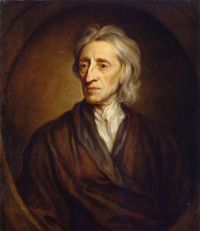
Portrait of John Locke John Locke An Essay Concerning Human Understanding…

Who knows not what odd notions many men’s heads are filled with, and what strange ideas all men’s brains are capable of ? But if we rest here, we know the truth of nothing by this rule, but of the visionary words in our own imaginations ; nor have other truth, but what as much concerns harpies and centaurs, as men and horses. For those, and the like, may be ideas in our heads, and have their agreement or disagreement there, as well as the ideas of real beings, and so have as true propositions made about them.
Source: Wikisource

Portrait of John Locke John Locke An Essay Concerning Human Understanding…

But when we would consider, or make propositions about the more complex ideas, as of a man, vitriol, fortitude, glory, we usually put the name for the idea : because the ideas these names stand for, being for the most part imperfect, confused, and undetermined, we reflect on the names themselves, because they are more clear, certain, and distinct, and readier occur to our thoughts than the pure ideas : and so we make use of these words instead of the ideas themselves, even when we would meditate and reason within ourselves, and make tacit mental propositions.
Source: Wikisource

Portrait of John Locke John Locke An Essay Concerning Human Understanding…

To form a clear notion of truth, it is very necessary to consider truth of thought, and truth of words, distinctly one from another : but yet it is very difficult to treat of them asunder. Because it is unavoidable, in treating of mental propositions, to make use of words : and then the instances given of mental propositions cease immediately to be barely mental, and become verbal. For a mental proposition being nothing but a bare consideration of the ideas, as they are in our minds, stripped of names, they lose the nature of purely mental propositions as soon as they are put into words.
Source: Wikisource

Get perspective with Kwize: daily news enlightened by great literature