Summary

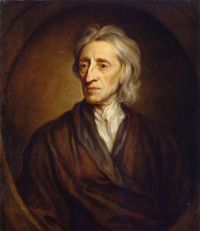
Portrait of John Locke John Locke An Essay Concerning Human Understanding…

Without such a revelation, the believing, or not believing, that proposition, or book, to be of divine authority, can never be matter of faith, but matter of reason ; and such as I must come to an assent to only by the use of my reason, which can never require or enable me to believe that which is contrary to itself : it being impossible for reason ever to procure any assent to that which to itself appears unreasonable.
In all things, therefore, where we have clear evidence from our ideas, and those principles of knowledge I have above mentioned, reason is the proper judge
Source: Wikisource

Portrait of John Locke John Locke An Essay Concerning Human Understanding…

Reason, therefore, here, as contradistinguished to faith, I take to be the discovery of the certainty or probability of such propositions or truths which the mind arrives at by deduction made from such ideas, which it has got by the use of its natural faculties ; viz. by sensation or reflection.
Faith, on the other side, is the assent to any proposition, not thus made out by the deductions of reason, but upon the credit of the proposer, as coming from God, in some extraordinary way of communication. This way of discovering truths to men, we call revelation.
Source: Wikisource

Get perspective with Kwize: daily news enlightened by great literature