Summary

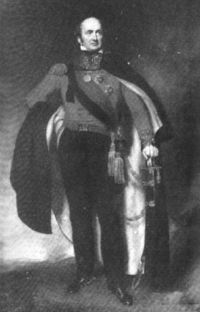
Portrait of John Malcolm John Malcolm,  Observations on the Disturbances in the Madras Army in 1809

“ When men had once passed the Rubicon, and commenced opposition to Government, what would be their plans? They must be settled by distant and probably divided committees: and every young officer would feel, in such a situation of affairs, a right to examine the actions of his superiors: and could any man, under such circumstances, when the chain of discipline was broken, rely on the order and fidelity of his troops? What could be offered to induce them to resist the temptations held out by Government? And if they did not desist, would they be equal to encounter the army of the state? ”
Source: Gutenberg

Portrait of John Malcolm John Malcolm,  Observations on the Disturbances in the Madras Army in 1809

“ I might fill a volume if I were to enter into any general reasoning on the vital wound given to military subordination by this measure. The relation of the private soldier to the subaltern has been well termed the key-stone of the arch: an army may survive any other change; but to disturb that relation, is to dissolve the whole: here begins the obedience of the many to the few. In civil society, this problem appears of difficult solution: but there, it is the obedience of the dispersed and disarmed many; it is rare, and in well regulated communities almost unfelt. ”
Source: Gutenberg

Portrait of John Malcolm John Malcolm,  Observations on the Disturbances in the Madras Army in 1809

“ And it is most certain, that an act of authority so harsh, and of such doubtful justice, against officers who had such a fair appearance of mere military obedience, and whose very fault, if they had one, must have sprung from a zeal for military privileges, was of a nature to vibrate through every nerve of an army. When the Government once did an act which made two officers of rank at least appear to suffer unjustly for the army, they entirely changed the character of the disputes. They drove the generosity, honour, and justice of the army into rebellion. ”
Source: Gutenberg

Get perspective with Kwize: daily news enlightened by great literature