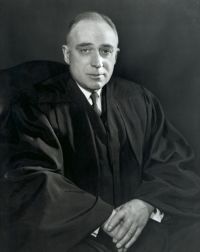
John Marshall Harlan II

John Marshall Harlan II

Summary

Portrait of John Marshall Harlan II John Marshall Harlan II Estes v. Texas — Concurrence

In the context of a trial of intense public interest, there is certainly a strong possibility that the timid or reluctant witness, for whom a court appearance even at its traditional best is a harrowing affair, will become more timid or reluctant when he finds that he will also be appearing before a 'hidden audience' of unknown but large dimensions. There is certainly a strong possibility that the 'cocky' witness having a thirst for the limelight will become more 'cocky' under the influence of television.
Source: Wikisource

Portrait of John Marshall Harlan II John Marshall Harlan II Estes v. Texas — Concurrence

I see no force in the argument that to exclude television apparatus from the courtroom, while at the same time permitting newspaper reporters to bring in their pencils and notebooks, would discriminate in favor of the press as against the broadcasting services. The distinctions to be drawn between the accouterments of the press and the television media turn not on differences of size and shape but of function and effect. The presence of the press at trials may have a distorting effect, but it is not caused by their pencils and note books.
Source: Wikisource

Portrait of John Marshall Harlan II John Marshall Harlan II Estes v. Texas — Concurrence

A trial in Yankee Stadium, even if the crowd sat in stony silence, would be a substantially different affair from a trial in a traditional courtroom under traditional conditions, and the difference would not, I think, be that the witnesses, lawyers, judges, and jurors in the stadium would be more truthful, diligent, and capable of reliably finding facts and determining guilt or innocence.
Source: Wikisource

Get perspective with Kwize: daily news enlightened by great literature