Summary

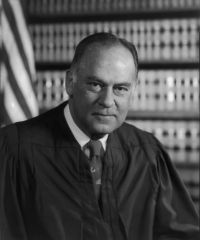
Portrait of Potter Stewart Potter Stewart Estes v. Texas — Dissent

I do not think that the Constitution denies to the State or to individual trial judges all discretion to conduct criminal trials with television cameras present, no matter how unobtrusive the cameras may be. I cannot say at this time that it is impossible to have a constitutional trial whenever any part of the proceedings is televised or recorded on television film. I cannot now hold that the Constitution absolutely bars television cameras from every criminal courtroom, even if they have no impact upon the jury, no effect upon any witness, and no influence upon the conduct of the judge.
Source: Wikisource

Portrait of Potter Stewart Potter Stewart Estes v. Texas — Dissent

In the light of this record and what we now know about the impact of television on a criminal trial, I can find no such prohibition in the Fourteenth Amendment or in any other provision of the Constitution. If what occurred did not deprive the petitioner of his constitutional right to a fair trial, then the fact that the public could view the proceeding on television has no constitutional significance. The Constitution does not make us arbiters of the image that a televised state criminal trial projects to the public.
Source: Wikisource

Portrait of Potter Stewart Potter Stewart Estes v. Texas — Dissent

I think that the introduction of television into a courtroom, is, at least in the present state of the art, an extremely unwise policy. It invites many constitutional risks, and it detracts from the inherent dignity of a courtroom. But I am unable to escalate this personal view into a per se constitutional rule. And I am unable to find, on the specific record of this case, that the circumstances attending the limited televising of the petitioner's trial resulted in the denial of any right guaranteed to him by the United States Constitution.
Source: Wikisource

Get perspective with Kwize: daily news enlightened by great literature