Summary

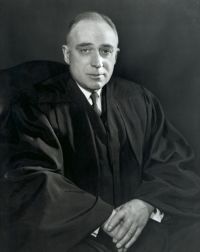
Portrait of John Marshall Harlan II John Marshall Harlan II Haynes v. United States (390 U.S. 85…

It is true, as the United States emphasizes, that registration is not invariably indicative of a violation of the Act's requirements; there are situations, which the United States itself styles 'uncommon,' [10] in which a possessor who has not violated the Act's other provisions is obliged to register. [11] Nonetheless, the correlation between obligations to register violations can only be regarded as exceedingly high, and a prospective registrant realistically can expect that registration will substantially increase the likelihood of his prosecution.
Source: Wikisource

Portrait of John Marshall Harlan II John Marshall Harlan II Haynes v. United States (390 U.S. 85…

Not every possessor of a firearm must, however, register; one who made the firearm, or acquired it by transfer or importation, need not register if the Act's provisions as to transfers, makings, and importations 'were complied with.' If those requirements were not met, or if the possessor did not make the firearm, and did not acquire it by transfer or importation, he must furnish the Secretary of the Treasury with his name, address, the place where the firearm is usually kept, and the place of his business or employment.
Source: Wikisource

Portrait of John Marshall Harlan II John Marshall Harlan II Haynes v. United States (390 U.S. 85…

We perceive no more in the draftsman's choice of tense than the obvious fact that the failure to register must precede the moment at which the accused is charged; we find nothing which confines the clause's application to failures to register which have occurred before a present possessor received the firearm. It follows that the phrase fastened upon by the United States is, at the least, equally consistent with the construction advanced by petitioner.
Source: Wikisource

Get perspective with Kwize: daily news enlightened by great literature