Summary

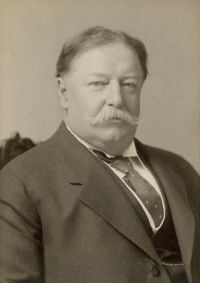
Portrait of William Howard Taft William Howard Taft Maryland v. Soper — Opinion of the Court

In order to justify so exceptional a procedure, the person seeking the benefit of it should be candid, specific and positive in explaining his relation to the transaction growing out of which he has been indicated, and in showing that his relation to it was confined to his acts as an officer. As the defendants in their statement have not clearly fulfilled this requirement, we must grant the writ of mandamus, directing the District Judge to remand the indictment and prosecution.
Source: Wikisource

Portrait of William Howard Taft William Howard Taft Maryland v. Soper — Opinion of the Court

It is enough if the prosecution for murder is based on or arises out of the acts he did under authority of federal law in the discharge of his duty and only by reason thereof.
In invoking the protection of a trial of a state offense in a federal court under section 33, a federal officer abandons his right to refuse to testify because accused of crime, at least to the extent of disclosing in his application for removal all the circumstances known to him out of which the prosecution arose.
Source: Wikisource

Portrait of William Howard Taft William Howard Taft Maryland v. Soper — Opinion of the Court

Do the facts disclosed by the amended petition for removal bring the defendants within section 33? The state insists that they are insufficient because they do not show that the defendants committed the act of homicide upon which the indictment is founded. The case of Illinois v. Fletcher (C. C.) 22 F. 776, seems to hold that a revenue officer can take advantage of the statute and secure a trial in a federal court only by admitting that he did the act for which he is prosecuted. We think this too narrow a construction of the section.
Source: Wikisource

Get perspective with Kwize: daily news enlightened by great literature