Summary

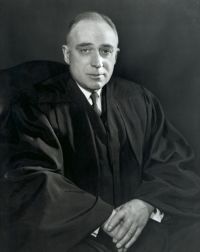
Portrait of John Marshall Harlan II John Marshall Harlan II United States v. Continental Can Company…

And to lay down a rule on either of the bases suggested would require a much more careful look at the nature of competition between industries than the Court's casual glance in that direction.
In any event, the Court does not take this tack. It chooses instead to invent a line of commerce the existence of which no one, not even the Government, has imagined; for which businessmen and economists will look in vain; a line of commerce which sprang into existence only when the merger took place and will cease to exist when the merger is undone.
Source: Wikisource

Portrait of John Marshall Harlan II John Marshall Harlan II United States v. Continental Can Company…

Hereafter, however, slight (or even nonexistent) the competitive impact of a merger on any actual market, businessmen must rest uneasy lest the Court create some 'market,' in which the merger presumptively dampens competition, out of bits and pieces of real ones. No one could say that such a fear is unfounded, since the Court's creative powers in this respect are declared to be as extensive as the competitive relationships between industries.
Source: Wikisource

Portrait of John Marshall Harlan II John Marshall Harlan II United States v. Continental Can Company…

The Philadelphia Bank case, which involved the merger of two banks plainly engaged in the same line of commerce, [4] is, however, entirely distinct from the present situation, which involves two separate industries. The bizarre result of the Court's approach is that market percentages of a nonexistent market enable the Court to dispense with 'elaborate proof of market structure, market behavior and probable anticompetitive effects,' ante, p. 458. As I shall show, the Court has 'dispensed with' proof which, given heed, shows how completely fanciful its market-share analysis is.
Source: Wikisource

Get perspective with Kwize: daily news enlightened by great literature