Summary

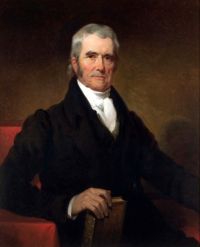
Portrait of John Marshall John Marshall Weston v. City Council of Charleston…

The people, for objects the most important which can occur in the progress of nations, have empowered their government to make these anticipations, 'to borrow money on the credit of the United States.' Can any thing be more dangerous, or more injurious, than the admission of a principle which authorizes every state and every corporation in the union which possesses the right of taxation, to burthen the exercise of this power at their discretion?
Source: Wikisource

Portrait of John Marshall John Marshall Weston v. City Council of Charleston…

The general government, by carrying their power to extremes in the creation of extensive loans, might furnish facilities of exempt investment, that would entirely absorb from the reach of state taxation all the funds of its citizens, and thus destroy one of its highest prerogatives and very existence. If the possible abuse of the power to tax by a state, is to infringe upon the right, the like objection will assuredly attach to the power of borrowing on the part of the United States.
Source: Wikisource

Portrait of John Marshall John Marshall Weston v. City Council of Charleston…

In the event of a resort to direct taxation, on the part of congress, whatever is subjected to federal assessment must, ipso facto, be discharged from all other imposition; inasmuch as a tax by a state, on any given article, must necessarily diminish its capacity of bearing other exactions, and, if carried to excess, must frustrate any attempt on the part of the general government to raise a revenue from the same sources. In fact, there are but few powers reserved to the states that, upon the possibility of abuse, may not be brought under the ban of interference with federal measures.
Source: Wikisource

Get perspective with Kwize: daily news enlightened by great literature