Summary

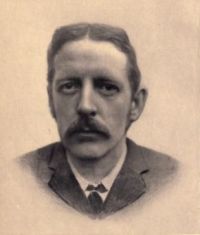
Portrait of John Miller Gray John Miller Gray 1911 Encyclopædia Britannica, Volume 16… (1911)

Then in the ’fifties we have the numerous etchings of sporting scenes, contributed, together with woodcuts, to the Handley Cross novels.
Turning to Leech’s lithographic work, we have, in 1841, the Portraits of the Children of the Mobility, an important series dealing with the humorous and pathetic aspects of London street Arabs, which were afterwards so often and so effectively to employ the artist’s pencil. Amid all the squalor which they depict, they are full of individual beauties in the delicate or touching expression of a face, in the graceful turn of a limb.
Source: Wikisource

Portrait of John Miller Gray John Miller Gray 1911 Encyclopædia Britannica, Volume 16… (1911)

The earnestness and gravity of moral purpose which is so constant a note in the work of Hogarth is indeed far less characteristic of Leech, but there are touches of pathos and of tragedy in such of the Punch designs as the “Poor Man’s Friend” (1845) , and “General Février turned Traitor” (1855) , and in “The Queen of the Arena” in the first volume of Once a Week, which are sufficient to prove that more solemn powers, for which his daily work afforded no scope, lay dormant in their artist. The purity and manliness of Leech’s own character are impressed on his art.
Source: Wikisource

Portrait of John Miller Gray John Miller Gray 1911 Encyclopædia Britannica, Volume 16… (1911)

Among such of his designs are four charming plates to Dickens’s Christmas Carol (1844) , the broadly humorous etchings in the Comic History of England (1847–1848) , and the still finer illustrations to the Comic History of Rome (1852) —which last, particularly in its minor woodcuts, shows some exquisitely graceful touches, as witness the fair faces that rise from the surging water in “Cloelia and her Companions Escaping from the Etruscan Camp.”
Source: Wikisource

Get perspective with Kwize: daily news enlightened by great literature